Planet Earth: Fresh water * * *
 Planet Earth: Fresh Water (link to DVD at Amazon)
Planet Earth is a famous series of 6 DVDs of nature and animal photography that is renown for its remarkable cinematography and rare footage. Episode 3 is called “Fresh water” and it shows footage of a variety of fresh water systems from around the world. I’m not sure this particular unifying theme really works, but whatever.
We start in at Angel Falls in Venezuela. Then off to Alaska where we watch some underwater footage of grizzly bears foraging on abundant salmon. Zip, off to India to watch superb underwater footage of smooth coated otters hunting fish. They work in packs and share their catch. A 4-meter crocodile comes along and the otters harass it as a pack and chase it away (no joke, it’s cool). Zip, off to the Mara River in east Africa. The wildebeest must cross in one particular place and here the Nile crocodiles wait. These beasts grow up to 5 meters and they show one taking a full grown wildebeest. Zip, off to Malawi Lake in Africa. These lakes are home to a huge diversity of cichlids. They show some night time footage of dolphin fish hunting for cichlids. The best part is the segment on the emergence of the midges. Zip, off to eastern Russian and Lake Baikal, the largest lake in the world. The lake is full of wacky and one-of-a-kind animals, such as the world’s only fresh water seal. But we don’t stay long at Lake Baikal. Zip, we are off to the Amazon River. Here we have a cool clip of fresh water dolphins, bofeo, hunting fish and performing mating ceremonies. Zip, off to Iguezu falls in Brazil and then to the largest wetland in the world. A short clip follows on some of the fish of this region, including piranhas. Short clip of a crocodile taking a pretty bird. Zip off to India and the largest mangrove forest in the world. Here we have some cool footage of crab-eating macaques that swim and forage under water. Zip, of to the Hudson River delta and some footage of huge snow geese flocks.
Overall, this episode has a few rare clips of rare animals and some cool waterfall shots. The cinematography is ok, but the format of a multi-location theme, in this case ‘fresh water’, leads to disjointed clips and the lack of a unifying story. This one is probably hard for kids to follow; it is very disjointed. You might want to have a globe handy and plan to pause to show where the footage is taken. Or maybe just use it if your kids are doing a report on one of the regions and would like to see some footage of the animals there.
Planet Earth: Pole to Pole
Planet Earth: Mountains
Rented from Netflix
Labels: documentary, Nature
posted by eeh at 12:15 AM


 This is a documentary on a 5th-grade program in New York that teaches ballroom dancing to inner city kids. This ethnically and culturally diverse group of kids study ballroom all year and at the end there is an all city competition. On the surface, this seemed to me a little like watching sheepdog trials. Curiously mezmerizing even though, you know, you're just watching kids take ballroom classes. The kids are all in this gawky 12-13 stage when the boys are generally smaller and younger looking than the girls. That creates some visual humor. Also the kids are just starting to not think 'ICK' when they think of the opposite sex. There is a funny sense that all the kids are worrying about cooties. One especially funny scene is when the instructor tells the kids to look into their partner's eyes. They can't do it. Simply can't. By the end, the kids are heating up the floor doing the merenge, tango, swing and foxtrot. That is something to see. Karina (9yrs) was engaged the whole time and liked it. Jake (5yrs) watched but didn't think much of it.
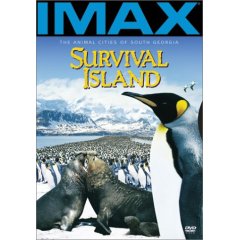 South Georgia Island is the site of many long-term studies on albatrosses and penguins and I have worked with much of this data as part of my work on estimation of population status for long-lived species. However, I have never actually seen any of these animals. So I was very interested to see this IMAX dvd shot on South Georgia Island and featuring some of the animals I have known only as data points.
 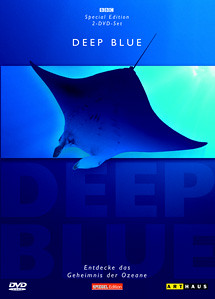 The Deep Blue (2003) is an amazing documentary about life in the ocean. It is filmed in multiple locations around the world's oceans. Polar, tropical, Atlantic, Pacific... Watching it we just couldn't stop say "Oh, Wow, WHAT is that? Whoa, that is sooo amazing!" over and over. Even if you study the oceans and have seen a lot of nature videos, you are guaranteed to see something new and amazing. Probably you will also see footage of something you have always wanted to see. As I write this I am watching night footage of a ray attacking a fish and white-tipped reef sharks tirelessly searching the reef for hidden fish in the dark. Seriously cool stuff. And it has the mostly amazing footage of fish schooling -- like a tornado under water. This ranks as about the best nature photography I have ever seen!! I've seen a lot of IMAX nature documentaries; this one blows all those out of the water (ha, ha).
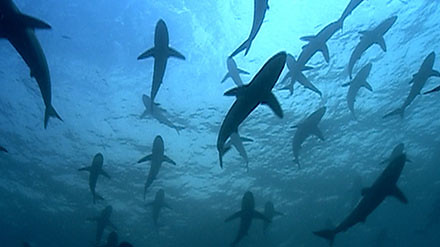 So it's a MUST see for anyone into nature photography and documentaries. Note it may be a bit much for kids who have a hard time with animals getting eaten. There are some graphic scenes of baby sea lions getting nailed by by killer whales, a pack of killer whales working together to kill a grey whale calf, and other scenes of predators in action: rays, sharks, octopuses, etc. My 5-year old cried during these parts; we lied and told him the calf got away (he wanted to believe this so ignored the graphic evidence to the contrary...). Also the DVD is not exactly educational. It's mostly amazing photography with little dialogue. Kids probably should start off with some more educational DVDs and trips to the aquarium to really appreciate this.
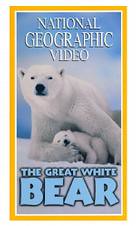 This is a National Geographic documentary from 1999 about a mother polar bear and her 2 cubs. It is set on the Svalbard archipelago, which is north of Norway just above the artic circle. This area is strikingly beautiful and the footage covers parts of spring, summer and fall. Although this documentary doesn't have the glitz of, say, March of the Penguins, nor its tight story-line, nonetheless it has some fantastic photography. You'll see the mother as she comes out of the den for the first time, fun scenes of mom and cubs playing ice-plunging in the mushy ice, and underwater footage of the bears swimming. The footage doesn't just focus on polar bears, you'll also learn about and see good footage of actic foxes, guillimonts, bearded seals, walruses, Svalbard reindeer, and artic gulls. The footage of the bearded seals was especially interesting and it includes hard to get and rare underwater footage. I recommend this film for anyone who likes nature photography and/or is interested in the artic.
  Control Room is a documentary on the Al Jazeera news station from just before the invasion of Iraq to right after the fall of Baghdad. We start with one of the lead journalists in his car in Iraq (I think), and he is talking about his incredulity about the impending war. The style continues like this as a fly-on-the-wall view of mainly Al Jazeera journalists, the US PR fellow, and the Al Jazeera chief, as to what they are thinking and feeling as the war unfolds. All these people are well-educated, erudite, and earnest. I was fascinated while listening to them give their personal impressions of what they are seeing on the TV or what they are reporting about right at that moment.
  The Al Jazeera chief is especially intriquing. Very sharp guy and very charismatic -- in a way that probably will be surprising for an American. At least it was surprising for this American. As the war proceeds, the Al Jazeera journalists and chief are visibly becoming more and more tired. They haven't slept for days. The day that the US arrives into Baghdad, we see the bombing of the building from where Al Jazeera is broadcasting. It's very sad, as one of the journalists is killed. The Al Jazeera folks are very affected, as you would expect, and basically you are watching as they find out what happened and then talking sort of woodenly about it and not really being able to comprehend it. The documentary ends as we watch the statue of Sadaam being taken down. The Al Jazeera journalists are watching and are dumbfounded -- 'Where is the Iraq Army? This is so embarassing...."
 The US Army PR guy actually comes across very well: intelligent, honest, sincere, and compassionate, while at the same time holding his ground against the Al Jazeera journalists who argued that the US Army was invading Iraq to take over Iraq. Interestingly, I found I related most to this US Army PR guy. He had his own views, but he understood that the Al Jazeera journalists interviewing him had different views and different life experiences and he wanted to understand why their views were so different. For example, one of the things he mentioned was that Arabs he talked to always linked the Iraq War to Palestine, whereas an American never would. He talked about how it made him feel awful and ashamed that he was more affected by seeing the pictures of dead American soldiers on Al Jazeera than the pictures of dead Iraqis.
 How Arnold Won the West is a documentary about the recall vote in California that ousted Govenor Gray Davis a month after he had been elected to his 2nd term. It is an often hilarious look at the spectacle of this highly unusual election in a state that by itself has one of the largest economies in the world. The recall vote came about because of an obscure law in California that allowed a recall with enough signatures. After the Republicans lost to Davis, a rich Republican senator -- who made and makes his fortune on the ViperKing, a car alarm -- put up about 1 1/2 million to get the signatures. And the recall was started. The Democrats in this film spend a lot of time whining about the injustice of this senator buying the signatures, even Bill Clinton makes a speech about political leaders never being able to make hard decisions if they faced recalls -- which he knows is B.S. since most of the world's democracies are parlimentary and under that system leaders always are under threat of a no confidence vote.
