Családi tüzfészek (Family Nest, 1979) * *
 Family Nest (link to DVD on Amazon)
Bela Tarr is one of the most renown -- albeit unknown -- Hungarian directors of avant-garde film (the other more famous Hungarian director of this ilk is Miklos Jansco). I had seen Tarr's film Kárhozat (Damnation) a couple years ago, and that ranks as one of the most striking films that I have ever seen. I would try to describe it but others have already done it eloquently enough: a link to a blog entry on Tarr's Satantango.
The films, Satantango, Damnation and Werckmeister Harmonies, are famous art films which explore the metaphysical and mystical using bleak black-and-white cinamatography. But before these films, Tarr made a series of social realism films while he was still in his 20s. These are very different and were shot in a kind of film-verite style with handheld cameras and small filming spaces. I had never seen his early work, and Kaja agreed to watch it with me although I warned that it would not be a feel-good film. Well, Family Nest was an experience. Kaja and I sat on the couch in a daze after it was over. It was like we had been psychologically beaten upon for an hour. Oy.
The movie is set mostly in one small apartment where, because of the housing shortage in Hungary in the 1970s, three families are crammed together. Imagine the worst kind of family dynamics possible, that it what Family Nest, aka Family Cesspool, makes you an intimate part of for a little over an hour. The filming and directing is masterful -- you really feel like you are there; I even felt like I could smell it.
The self-created hell in the family nest is oppressive. Everyone is crammed altogether, and they argue non-stop. When the lights go out, the arguments finally stop but then other joys continue. The father-in-law is a slimy man who is constantly pressuring his daughter-in-law for sex and slips into his daughter-in-law's bed next to the sleeping 2-yr old granddaughter. Finally, the daughter-in-law's husband comes back from the army, which will hopefully put the brakes on the nightly visits. The daughter-in-law has a woman-friend over that evening and a couple hours after his return, the husband and his brother walk the woman home. They rape her and then the husband comes home and has sex with his wife. Awful.
The movie ends with a epilogue. The husband and wife have separated -- the relationship was strained for some reason (hmm, I wonder why?). We get close-ups monologues of each bemoaning the loss of the relationship. There is a sense that life is only getting worse.
I gave it 2 stars just because it was so painful to watch. Both Kaja and I have family in Eastern Europe and this struck a little close to home -- not the abuse and rape bits, but rather the negative effects that social upheaval and communism had on families and the tendency of the strain to bring out the worst in people. A friend who grew up in Romania during the communist era put it this way -- she felt like people during this era had all their compassion sucked out them simply because life was so hard and the system pitted everyone against each other even against your own family. The system made people ugly and cruel to each other and this movie captures that. But I do think, Family Nest is a must-see for Iron Curtain-era filmmaking. The directing is masterful.
Background on Bela Tarr from KinoEye
Review of the films of Bela Tarr
Labels: Bela Tarr, communist era, Hungary
posted by eeh at 2:02 PM


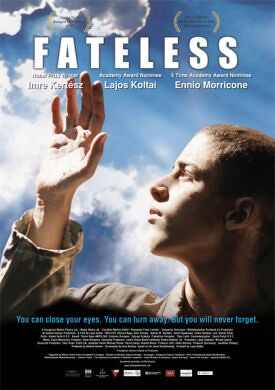 Movies about the holocaust always make one hesitate. "Am I really in the mood for this?" is the invariable question. Fateless is a movie set during the holocaust – although it is not *about* the holocaust. Rather it is a movie about the most profound experience of the script writer's life, which was the year he spent in a concentration camp in Poland. The film is not making a statement. It is not trying to 'make you understand'. Rather it is an honest and personal story about what it meant to him to go through this experience. In this, it challenges our definition of the horror of the holocaust, because that definition must somehow come to grips with… happiness. For the writer, happiness was the one free hour they had each day between end of work and lock-down in the barracks – an hour that just so happened coincided with dinner. This hour was raw happiness. In that moment, it seemed he was to say, you are not thinking about the bigger picture that your happiness is an artificial result of the fact that you are being worked and starved to death. You are concerned with the here and the now, with your small spot of reality, and in that moment, he experienced the intense happiness of a moment of free time combined with the anticipation of food. Also the film shows the profound bonding that occurred between the prisoners. Again it occurs when they are faced with inhumanity, for example being forced to stand all day and night, but nonetheless regardless of the reason, the reality is that intense bonding occurs. Also he experienced true friendship and kindness in the camps – from fellow prisoners in the camp who reached out to help him. In some ways the film reminded me of the feelings that war veterans try to convey – the conflicting feeling that their experience was hell but at the same time was the most profound and bonding experience of their life.
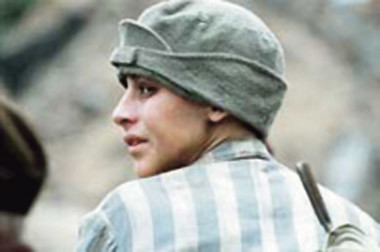 Fateless is a beautiful and honest movie that I strongly recommend to anyone who has the film “Schindler’s List” on their personal top 100 film list. The writer is highly critical of Schindler’s List, which he views as not an honest portrayal of the experience, but rather a Hollywoodification of the experience and a film that makes us view the people sent to the camps as caricatures rather than people just like anyone else. Nonetheless I think that if you didn’t like Schindler’s List or intend never to see it, then Fateless probably isn’t for you either. Personally, I think Fateless is quite a bit better than Schindler’s List, and it surprises me that it did not get a bigger indie theatre showing in Seattle.
 Péter Bacsó is a Hungarian director who specializes in tragicomedies about social issues, especially issues concerning totalitarianism and an over-powerful police state. Two of his highly-regarded films are Te rongyos élet (Oh, Bloody Life, 1983) and A Tanú (The Witness, 1969), a satirical anti-Stalin film that was banned for 9 years. He particularly writes films about life under totalitarianism. Peter Bacso: "Our [meaning he and his screenwriter] films always go back to the 50's, because our greatest problem is to not return to what we were in that era. It's our responsibility to speak in cinema of things we can't say in politics or science."
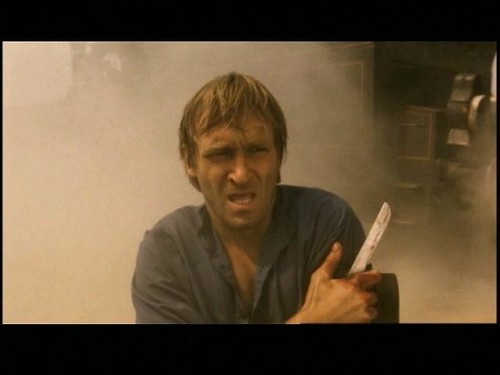 The man leading the horse into the train begins to beat the horse, and after an altercation, Zorka knifes and presumably kills the man. As he is being led away, a dazed woman dressed in a burlap bag is found in the train.
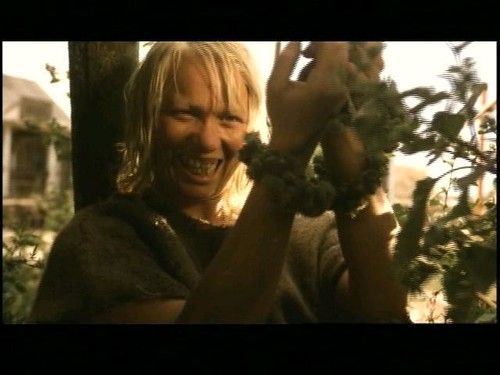
 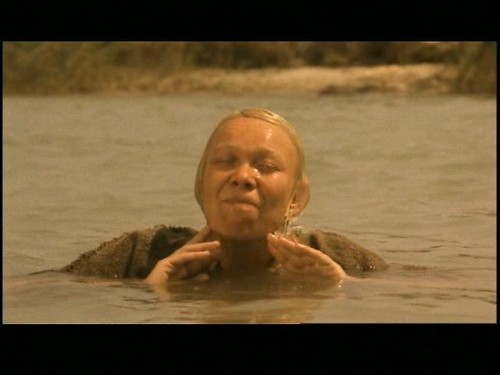 Paranya. That is what she is called. Paranya has the intelligence and innocent outlook on life of a toddler. She takes up residence in the town, and we see her as she wanders about, playing with the children, scrounging for food, chasing the geese, and occasionally being frightened and harassed by some young men in the village. Nonetheless, the villagers generally take care of her, so it is not an entirely cruel relationship. But one day, things begin to spiral out of control when Piranya calls Stalin her fiancée. She is being tormented by the village bullies again, and runs to a picture of Stalin, and cries out ‘Stalin protect me! Stalin, my fiancée!’ A policeman overhears this, and by the time his report gets to headquarters, Paranya is arrested and turned over to the secret police because...well...you can't take chances when your head is on the line. The secret policeman who interrogates her is a bit insecure in his position, and he can't afford to take any chances. She is a capitalist spy(@!?), and he will not let her trick him. She is tortured in order to force her to speak and reveal her mission. Since she can speak all of five words, this is simply not possible. Yet, they cruelly torture her nonetheless.
 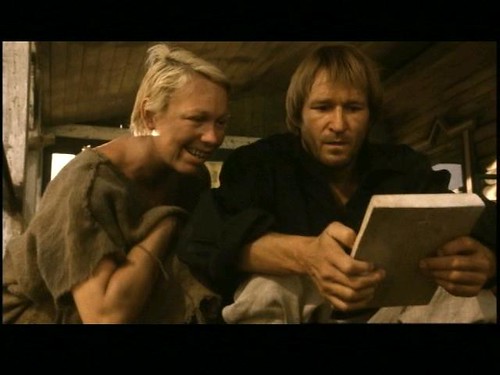 When she is finally released back to the village, she is traumatized and when she sees something that reminds her of torture, she yells out uncontrollably the words they said to her while in jail, “Spy! Take her away. Spy! Spy!” The authorities take these outbursts seriously, and slowly random townfolk are arrested. In the end Zorka and Paranya – these two souls irreversibly damaged by the cruelty of the State -- are reunited in a sad conclusion.
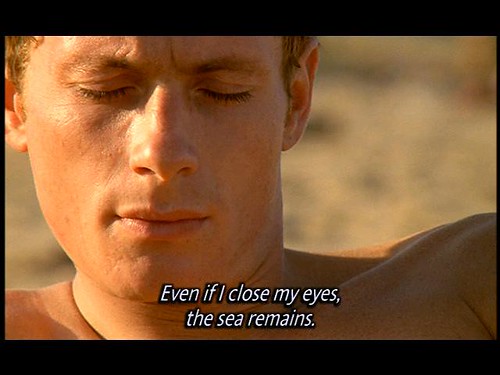 Szerelmesfilm is a 1970s movie from the Hungarian director Istvan Szabo about two childhood friends, later teenage sweethearts, who are separated when Kata, the woman, emigrates to France after the 1956 Hungarian Uprising while Jancsi, the man, stays in Budapest. Of course, in this time, travel to the West was not permitted and it is ten years until he gets permission to visit her in France. The movie is about his visit and trying to sort out his childhood/teenage memories of Kata.
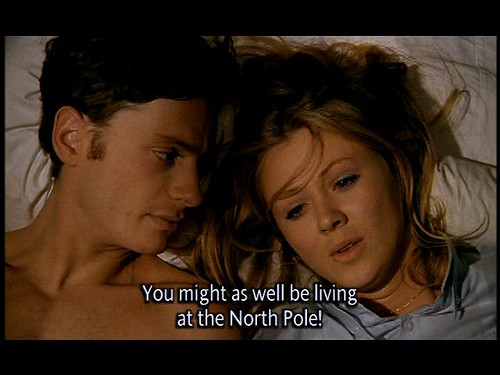 Although a small intimate story, it is ultimately about the generation born in the mid-1930s behind the Iron Curtain. They were children during WWII and grew up in upheaval and tragedy, they were young adults in the Communist era and experienced both the revolts and the resultant oppression, and finally they lived with the disappearances. People had to emigrate in complete secrecy at considerable personal risk. People would wake up one morning and their best friend or brother or aunt would be gone. And they couldn't come back. I suppose anytime that a group of
 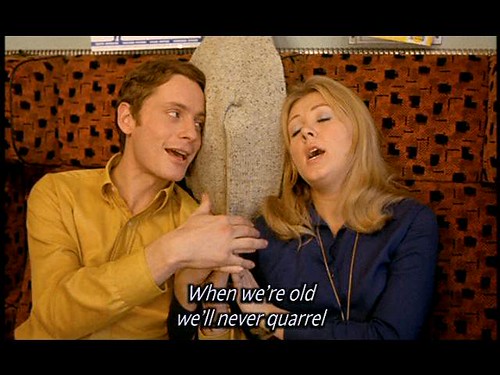 people go through difficult times together, they form a special bond and are left with a feeling that others can't quite understand them. It's a kind of nostalgia -- although we often use that word for pleasant memories. Here it is a nostalgia driven by potent memories and one craves those who were there and went through the same things.
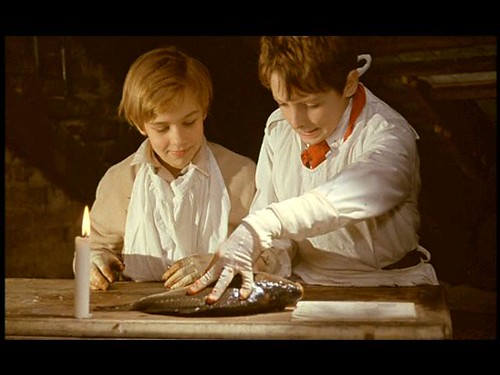
 cellar during the bombing raids. The two childhood actors that play Joza and Kata are precious and perfectly cast. The two kids get up to some funny antics, and there is a painful for them, but funny to watch, scene where there is a trial of the two by their Young Pioneers troop. They are accused of a) kissing and b) loving each other more than the troop.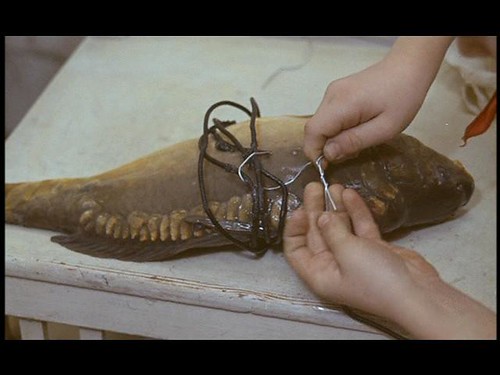
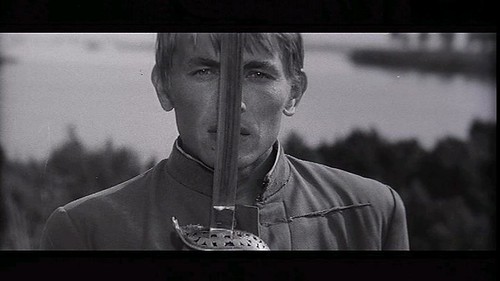 Miklos Jancso's films are famous for plunking the viewer down in the middle of a scene with no background or context to ground the viewer. It's disorienting. The Red and the White is especially like this. As the film starts we see two men running across a field. You don't know who they are and you are never told. What's going on? Who are these characters? Eventually, we piece together that they are fighting for a Red Army militia and being hunted by a White Army militia.
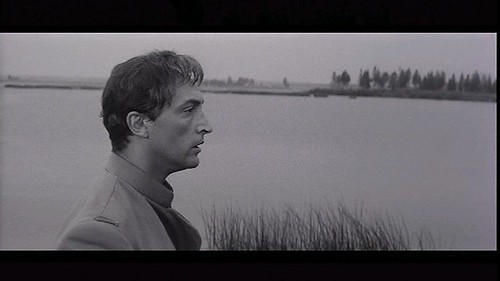 Jancso’s films are purposely disorienting. That said, some basic knowledge of the 1918 Civil War in Russia, will help you feel a little feel disoriented. But I suggest that you view this as an answer to the question 'What is the setting of this painting?' rather than 'What is the setting of the plot?', because this film does not have a plot and there is not meant to be a plot, per se. In the summer of 1918, civil war breaks out in Russia. There is the Red Army which is fighting for the Bolshevik government of Vladimir Lenin and is opposed a variety of anti-Bolshevik forces. One of the more important of these is the White Army, which in the summer of 1918 was a fine fighting force, though small in numbers. There are also a confusing array of other anti-Bolshevik armed groups, such as the Greens. In southern Russia, in the summer of 1918, small bands of these groups are fighting each other. The fighting is characterized by back and forth: capture, retreat, capture, retreat.
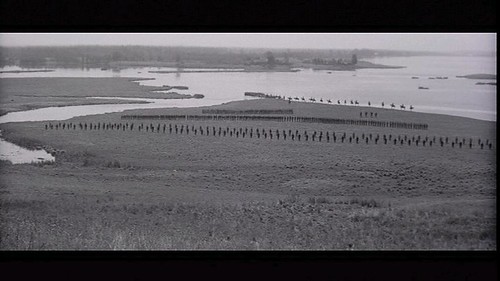 The Red and the White is ranked by film critics as one of Jancso's best pieces of work and an important anti-war film. But for me personnally, I liked
 Gyorgy Cserhalmi has been one of the top leading actors in Hungary since the 1970s. He is also well known in Slovakia and the Czech Republic. I've seen him described as the "best known Hungarian actor in Slovakia" (hmm) and he received a life-time achievement award by the Slovak film academy. Of course, unless you live in Hungary, the Czech Republic, or Slovakia, you have probably never heard of him. I first saw him in Zelary, which was nominated for best foreign film at the Oscars a few years ago. He has been in over 70 films, but most of these are a) in Hungarian and b) not available outside Hungary. Those that are available tend to art-films or film-noir, which really belies his work since he has been in loads of dramas and crime dramas. But you take what you can get, and so I have watched many art-films and film-noir that I would have never watched otherwise:
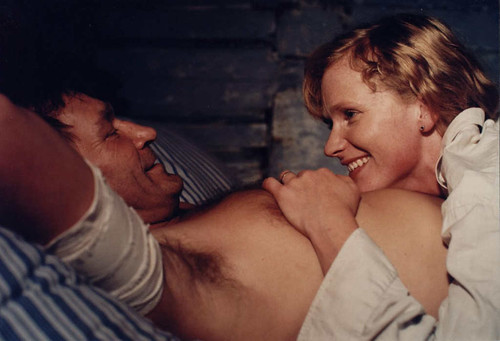
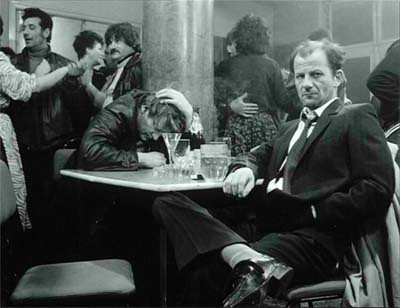
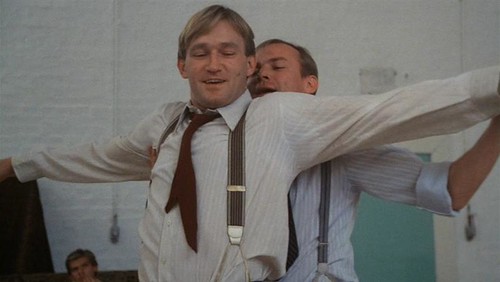
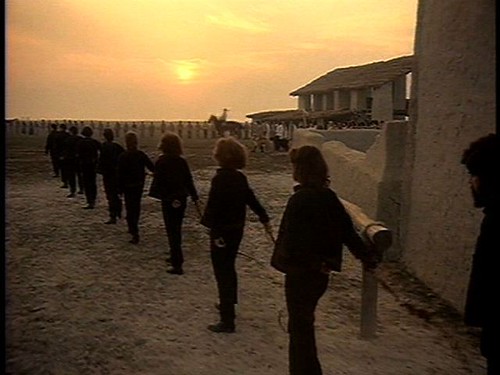
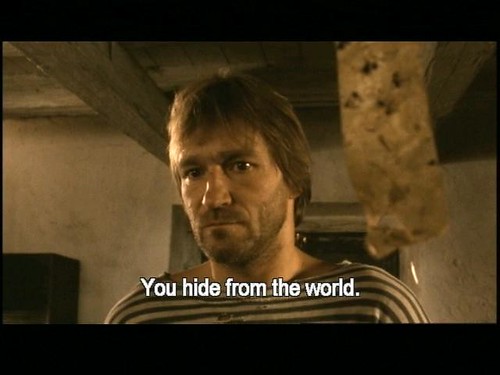
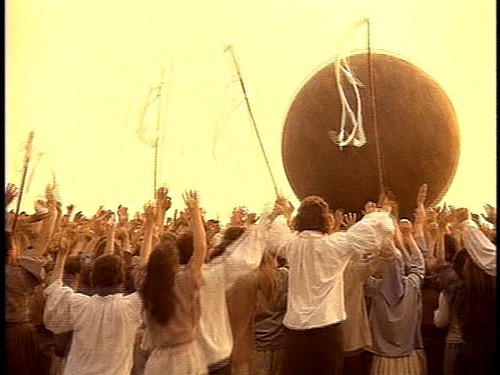
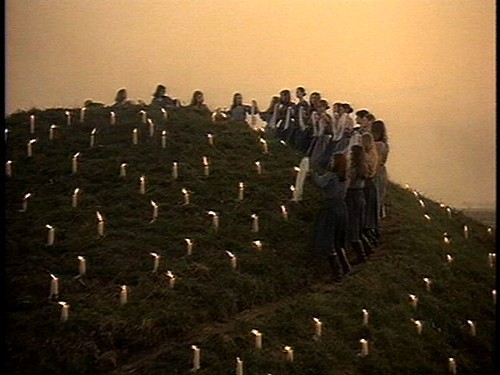
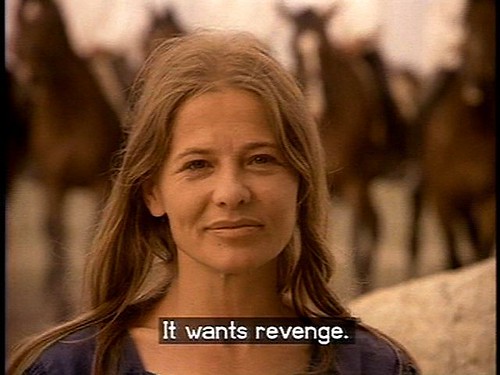
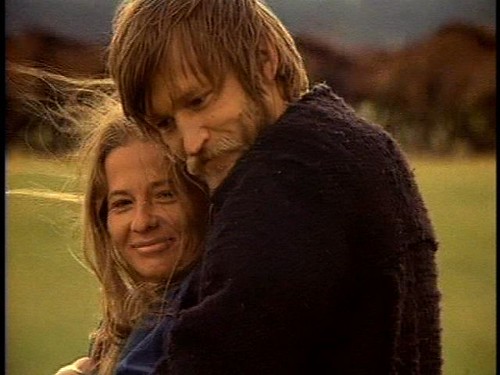
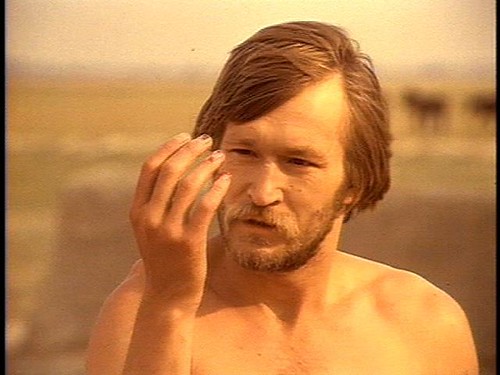
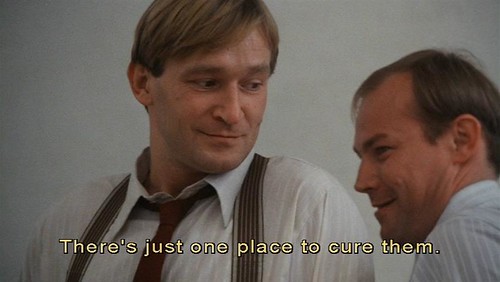
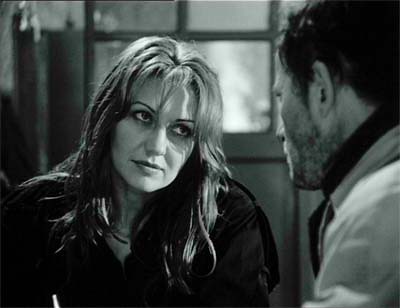 I watched this because I was curious to see Gyorgy Cserhalmi in another role after Zelary. He was the least hypnotic of the performers (he's the one asleep on the table in the picture above). I think this was the script. His character was meant to be shallower, perhaps. On the otherhand, the main supporting woman was really quite captivating, if a bit depressing.
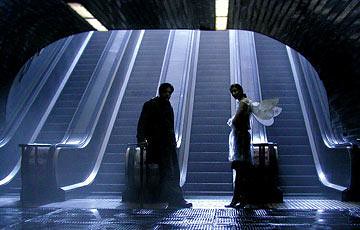 This is a recent Hungarian movie set in the Budapest subway system. Not much happens. A lot of over the top symbolism about maybe depression or futility or nihilism, or something like that. Then the main character is brought to the light by a fair maiden. Hmm.... Well, I didn't fast-forward through anything, but I kind of wish I had. The only bit that was interesting/memorable is how much the characters looked -- physically that is -- like people out of Seattle. The same grungy look can be seen on any bus. Also facial features often looked American; made me wonder how many Americans have Hungarian ancestry.
