Monday, May 15, 2006

Sztálin menyasszonya (Stalin’s Bride) * *
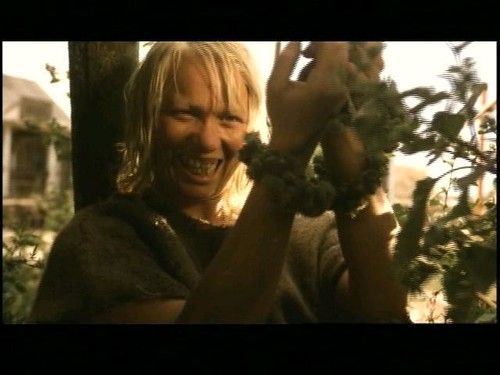
Péter Bacsó is a Hungarian director who specializes in tragicomedies about social issues, especially issues concerning totalitarianism and an over-powerful police state. Two of his highly-regarded films are Te rongyos élet (Oh, Bloody Life, 1983) and A Tanú (The Witness, 1969), a satirical anti-Stalin film that was banned for 9 years. He particularly writes films about life under totalitarianism. Peter Bacso: "Our [meaning he and his screenwriter] films always go back to the 50's, because our greatest problem is to not return to what we were in that era. It's our responsibility to speak in cinema of things we can't say in politics or science."

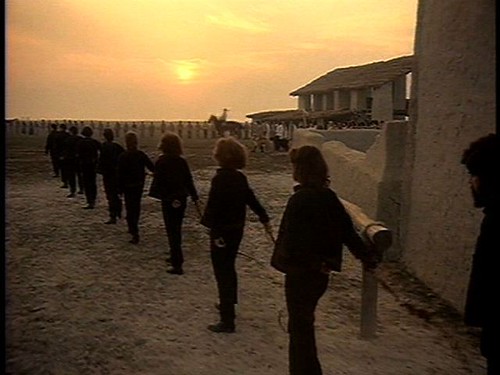
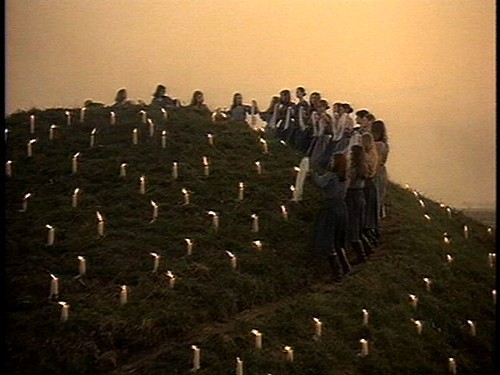
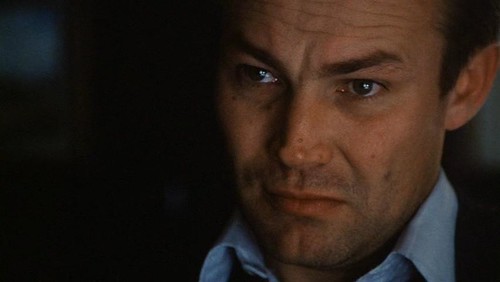
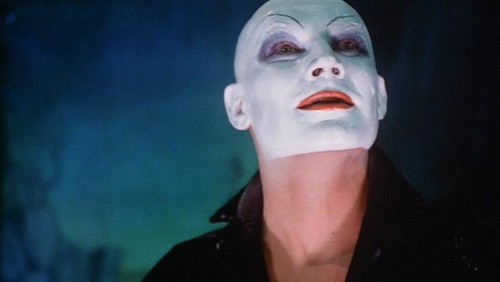
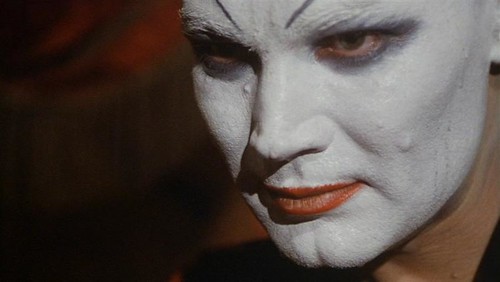
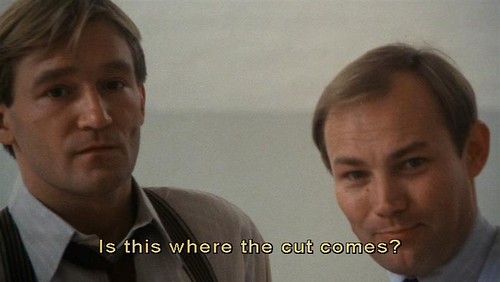
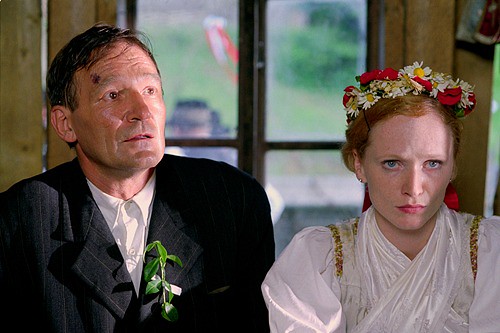
The summary of this film on the DVD cover distributed by Facets is “A young, maligned woman, nicknamed Stalin's Bride, by the cruel townsfolk, is taken away by the authorities thanks to her nickname. She gets her just desserts, though, when she returns to town to face her tormenters.” This doesn’t even begin to describe this movie. Did they watch the film or know anything about Bacso’s films? This movie is set in 1937 in the Ukraine, during and a few years after the forced collectivization of the peasants. The movie opens as peasants are turning in their private property – for the “state”. A man, Zorka, gives up his prize racehorse. The man leading the horse into the train begins to beat the horse, and after an altercation, Zorka knifes and presumably kills the man. As he is being led away, a dazed woman dressed in a burlap bag is found in the train.
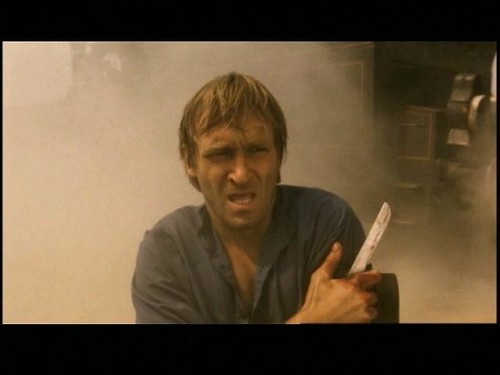
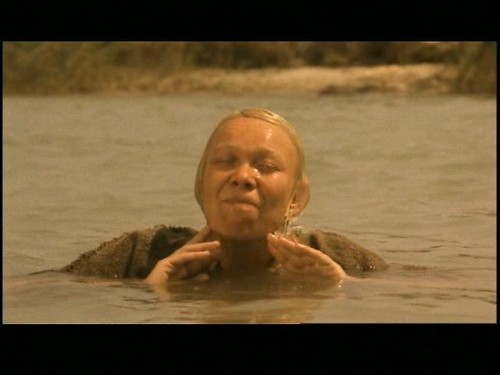
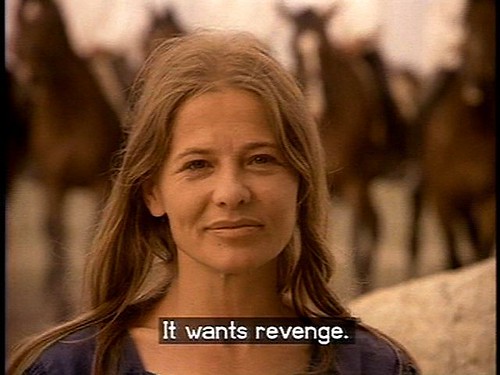
Paranya. That is what she is called. Paranya has the intelligence and innocent outlook on life of a toddler. She takes up residence in the town, and we see her as she wanders about, playing with the children, scrounging for food, chasing the geese, and occasionally being frightened and harassed by some young men in the village. Nonetheless, the villagers generally take care of her, so it is not an entirely cruel relationship. But one day, things begin to spiral out of control when Piranya calls Stalin her fiancée. She is being tormented by the village bullies again, and runs to a picture of Stalin, and cries out ‘Stalin protect me! Stalin, my fiancée!’ A policeman overhears this, and by the time his report gets to headquarters, Paranya is arrested and turned over to the secret police because...well...you can't take chances when your head is on the line. The secret policeman who interrogates her is a bit insecure in his position, and he can't afford to take any chances. She is a capitalist spy(@!?), and he will not let her trick him. She is tortured in order to force her to speak and reveal her mission. Since she can speak all of five words, this is simply not possible. Yet, they cruelly torture her nonetheless. When she is finally released back to the village, she is traumatized and when she sees something that reminds her of torture, she yells out uncontrollably the words they said to her while in jail, “Spy! Take her away. Spy! Spy!” The authorities take these outbursts seriously, and slowly random townfolk are arrested. In the end Zorka and Paranya – these two souls irreversibly damaged by the cruelty of the State -- are reunited in a sad conclusion.
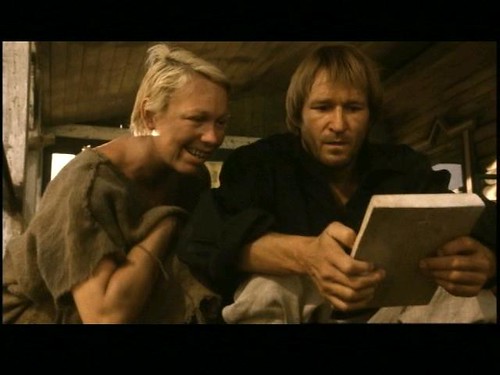
The movie is about the destruction of people by a cruel and capricious State, a State that is so paranoid that it tortures an innocent and obviously simple woman. It unable for a second to see common sense.

My personal thoughts
This movie was painful to watch. Although the women villagers generally take care of Paranya, she is cruelly teased by the young men and that is hard to watch. Her torture in jail is also difficult, although it is not as explicit and ‘in your face’ as it could be. The movie also suffers from a variety of issues. The actress playing Paranya was ok, but I was aware that she was an actress. There subplot involving Zorka is either weak or its playing on some cultural reference (like some stock Russian peasant stereotype) that I couldn’t decipher. He kills a man early on, but later he is played as a "lost soul" (am I missing something? Looked to me like he murdered someone in plain view of the whole town...).

I wanted to see the film because I’m into eastern European films that explore the personal aspects of the political tragedies of the 20th century: WWI, WWII, and occupation and totalitarianism. Hungarian directors are known for making philosophical films and reflective films that try to make sense of this experience. So I pretty much had to see this film, especially given Bacso’s other films on this topic (The Witness, Oh Bloody Life). But I didn’t really like Stalin’s Bride much as a film. I was aware too much of the acting. I can’t put my finger on it, but it didn’t feel like these were pre-WWII Ukrainians. Maybe the fact that they were speaking Hungarian….but of course this was made for the home market, so of course they would speak Hungarian. Or perhaps it’s that it was trying too hard to make a statement, and I don’t like films that try to do that – regardless of how much I agree with the statement. On the other hand, I respect Bacso films for tackling difficult social issues that most directors avoid, and for basically throwing the injustice in your face. This film is about collectivization and the paranoid police state, but his films tackle a variety of social issues.

Bottom Line: I don’t personally know anyone who would want to see this film. But if you have any of the following highly esoteric interests, I would recommend it:
1. Hungarian film, but this should definitely not be your entry in to that country’s cinema.
2. Anti-torture films (think the anti-war verite genre but different). The torture is not explicit.
3. Eastern European popular reflections on life under communism/totalitarianism/collectivism.
4. The films of Peter Bacso.
If you don’t have any of these interests, then it’s difficult for me to imagine why you would watch it. There are more entertaining satires of totalitarianism from Eastern Europe that come to mind: Zert (The Joke) and O slavnosti a hostech (Report on the Party and Guests, 1966).

Rented from Netflix.
My epinions review of Stalin's Bride.

Labels: , , ,

Wednesday, November 09, 2005

Gyorgy Cserhalmi films


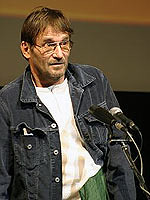
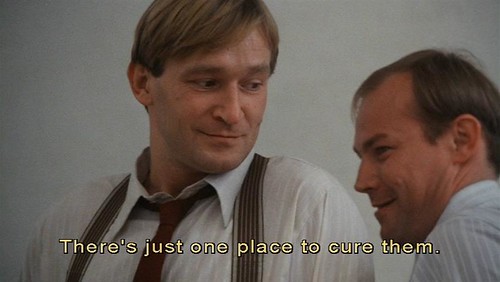
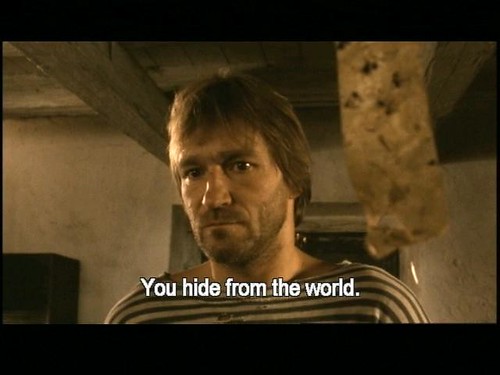
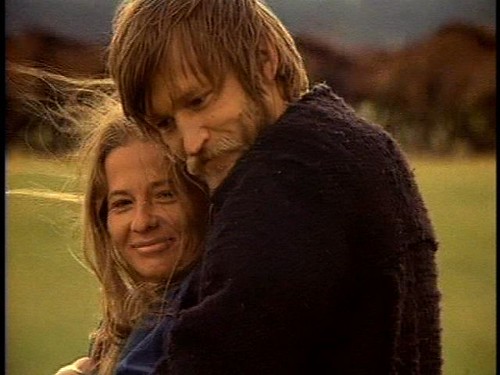
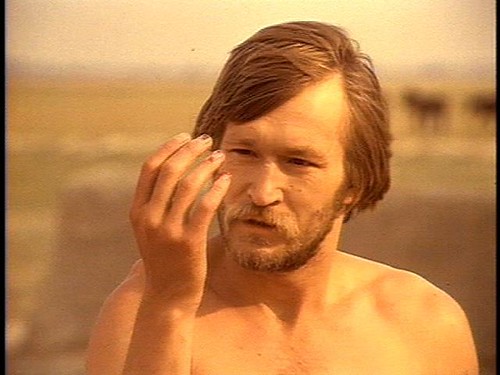
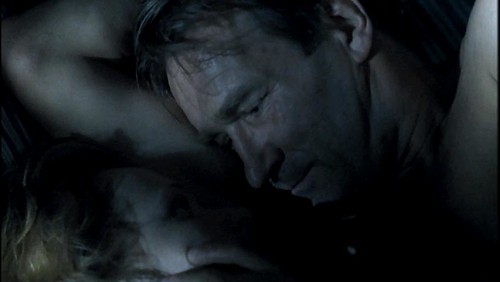
Gyorgy Cserhalmi has been one of the top leading actors in Hungary since the 1970s. He is also well known in Slovakia and the Czech Republic. I've seen him described as the "best known Hungarian actor in Slovakia" (hmm) and he received a life-time achievement award by the Slovak film academy. Of course, unless you live in Hungary, the Czech Republic, or Slovakia, you have probably never heard of him. I first saw him in Zelary, which was nominated for best foreign film at the Oscars a few years ago. He has been in over 70 films, but most of these are a) in Hungarian and b) not available outside Hungary. Those that are available tend to art-films or film-noir, which really belies his work since he has been in loads of dramas and crime dramas. But you take what you can get, and so I have watched many art-films and film-noir that I would have never watched otherwise: Zelary: an epic romantic drama about a young medical student who has to go to a little village to hide during WWII. Cserhalmi is the co-lead here and this is by far the best acting that I've seen of him. Geislerova (the lead) is also great. cserhalmi is the one asleepKarhozat(aka Damnation): director Bela Tarr, serious film-noir!! This is one of the most visually striking films I've watched. However with that glowing comment, I should note that only those willing to tolerate avant-garde film should consider watching this. Cserhalmi was in a supporting role. Released by Criterion Classics, avail. at DVDTimes.com. Kontroll: an odd story about a young ticket controller on the Budapest subway system by a young new Hungarian director. This is film-noir but accessible to a much wider audience than Karhozat. Cserhalmi is in a supporting role. Kontroll is widely available on DVD. they are rehearsing a playMephisto: a classic must-see by the Hungarian mega-director István Szabó. Anyone interested in modern European history and Germany should see this film. The lead, Klaus Maria-Brandauer, is fantastic. Cserhalmi has a supporting role and he's fairly wooden in it. Mephisto is widely available for rent or purchase. Hanussen: another by Szabó. Cserhalmi has a minor supporting role. Hanussen is also widely available for rent or purchase. I'm not a big fan of Hanussen. I didn't quite get the point of it. they are rehearsing a playElectra, My Love: director Miklos Jancso. Can you say art film? I really like this film. It's over the top 1970s art. Cserhalmi is in a lead role. This is available through Amazon. Hungarian Rhapsody: another Jancso art film. I can't believe I sat through this film. It's kind of about revolts against the aristocrats in Hungary in the 1800s. Cserhalmi is the lead and is pretty wooden here. This is hard to find and is on VHS only. Stalin's Bride: A satire about the Stalin-era and its corruptive effects on society. Cserhalmi is in a main supporting role. He mainly sits around cracking walnuts. The Bridgeman: the most expensive Hungarian film ever made, supporting role. This is available at Amazon. I haven't seen it yet. Szirmok, virágok, koszorúk (Flowers of Reverie): I don't know a thing about this. Available at Facets. It won a silver Berlin Bear at the 1984 Berlin International film festival. The following movies are available only in Hungary. This site odeon.hu lists shops in Budapest that have these titles. Az igazi Mikulás (The Real Santa): Just out in 2005, an apparently lame film (based on the really low marks on imdb.com) about a one-legged bum who by a curious turn of events is playing Santa and is beset by a little girl who wants a bike. Co US/Hungarian/Serbian produced film. Cserhalmi got a Hungarian film critics award for his acting here. Released on DVD in Hungary. Subtitled. The Unburied Man (A Temetetlen halott): a recent movie on the Hungarian prime minister Nagy Imre who stood up to the Communists in the 50s. He was executed, obviously. Cserhalmi was in a supporting role and was awarded best supporting actor for this performance. It's available on DVD in Hungary, but it doesn't seem to be distributed outside the country. Subtitled. Kántor 1-2: This is a TV detective series from the 1970s. Apparently out 11-2-2005 or 2-11-2005 and released by Mokep.hu. It probably won't be subtitled. Az ember, aki nappal aludt: Hungarian crime drama, poorly received by critics. On VHS and released in Hungary only. Hamvadó cigarettavég (Smouldering cigarette): romantic musical set in Budapest. It won a couple awards at festivals. On VHS and released in Hungary only. Megint tanú (Witness again): Hungarian satire by Peter Basco about modern Hungary. On VHS and released in Hungary only with English subtitles. The title is a reference to Peter Basco's acclaimed film Tanú (The Witness), a social commentary about life in the 1950s (I think). Anna filmje (Anna's film): Drama about a woman who gets pregnant with her 4th kid, unhappily. On VHS and released in Hungary only with English subtitles. Kék Duna keringő (Blue Danube Waltz): Crime drama. On VHS and released in Hungary only. A Nagy generáció (The Great Generation): This award-winning film is a commentary on the nature of the older and younger generation in Hungary during the mid-'80s. On VHS and released in Hungary only with English subtitles. Hajnali háztetők (Rooftops at Dawn): Drama about ?. Cserhalmi was awarded best actor in the Hungarian Film Fest for this; the film got best cinematography too. On VHS and released in Hungary only. Szörnyek évadja (Season of Monsters): This is by the director Miklos Jancso (very important eastern European director). It got an honorable mention at the Venice film festival. It one of Jancso's later political films exploring the subversion of grand socialist idealism. I can't believe this is unavailable outside Hungary. On VHS and released in Hungary only in Hungarian (grr). A Tanítványok (The Disciples): Message film about the dangers of big agrarian business. On VHS and released in Hungary only. Dögkeselyü: Crime drama about some old women who steal from a poor taxi driver. Nominated for a Golden Berlin Bear at the 1983 Berlin film festival. On VHS and released in Hungary only. Nárcisz és Psyché (Narcissus and Psyche): Bizarre drama. On VHS and released in Hungary only. 80 huszár: Period drama about the Hungarian revolution in 1848-49. Released in Hungary in Hungarian and German. Egy erkölcsös éjszaka (A Very Moral Night): Comedy about a whorehouse in a little town. Nominated for a Golden Palm at the 1978 Cannes film festival. Released in Hungary in Hungarian. Kísértet Lublón (Phantom on Horseback): ? Released in Hungary in Hungarian. Amerikai anzix (American Torso): Three Hungarians find themselves in the American West during the Civil War era, and they discuss love and surveying technology. Ok... Won an award at the Heidelberg film festival. Released in Hungary in Hungarian.
Labels: ,

Tuesday, November 08, 2005

Elektra My Love * * *

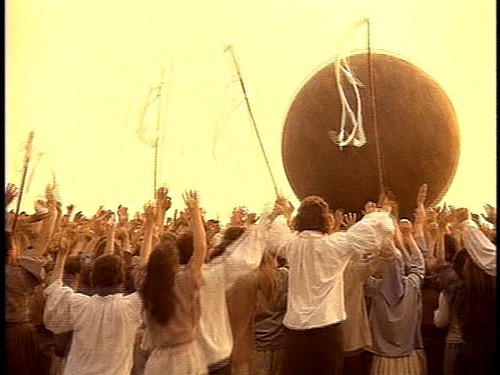
This is one of the best known films by the Hungarian director, Miklas Jansco. This is not a 'film' in the traditional sense of the word. It seemed more like a choreographed musical with the stage being an endless plain. The cinematography is beautiful -- deep colors and sweeping vistas. It does have a plot, but keep in mind that this is really a tragic greek play set to a choreographed Hungarina dance and the film is rather obviously a metaphor for life under communist rule. For example, one of the lines early on is "Lies pollute all like the plague". And the response of the king, is essentially the line I heard a number of times when in East Germany and the Czechoslovaki in the 1980s: "A lie repeated a thousand times becomes the truth". The ubiquitous dances. The plot is entertaining. Elektra's father, let's call him A1 since I can't recall his name, was a bad king and a weak king. A2, his brother and Elektra's uncle, kills him and takes over. A2 is a tyrant and keeps the populace in check with a combination of fear and placation. Elektra has been grieving her father's murder for the last 15 years. She speaks crazy things like freedom and justice are more important than peace. She is widely regarded as mad -- although she looks mostly like an over-serious 1970s feminist. She is waiting for her brother (played by Cserhalmi) to come back, and kill A2 and avenge A1's death. While waiting for him, she admonishes the people that they accept tyranny for peace and accept lies in exchange for full bellies. The people predictably put their hands over their ears during this sanctimonious lecture. Anyhow, her brother does show up, and Elektra kills him. Conveniently for her, he comes back to life. Her brother then kills A2 and his lackey. Elektra is now happy. Elektra and her brother then kill each other, and then they come back to life. They do this a few times. Finally, they fly off in a red helicopter. I'm not making this up. I watched Elektra My Love because Gyorgy Cserhalmi is in it and I'm trying to see his films. This is not too big of a task since very few Hungarian films are released on video. Of his 80 or so films, less than 10 have been released. This was the best of the three 1970s films I've seen. In Hungarian Rhapsody, he was desperately wooden, and here he's quite a bit more natural. Personally, I thought this was a really interesting film. The dances set on the plains were beautiful and I liked the Hungarian folk music that played throughout. That said, this is an Art Film. It's really not like anything you'd normally pick up in Blockbuster, and only those into impressionistic film would want to see this. Finally, the burning question...what on earth are they doing in the top picture with that big ball? Beats me. This was a bit of symbolism that escaped me. This clip will give you a good sense of the film: Buy it at Amazon Rent it from Netflix (amusing plot summary; I don't think they watched the movie) Rent in person at Scarecrow Video Good Kinoeye.org discussion of this film

Labels: , ,

Monday, November 07, 2005

Mephisto * * ** *

Klaus Maria-Brandauer as Heindrik HonrigBrandauer as Mephisto
Mephisto ranks as one of my favorite films of all time. Brandauer's performance is nothing short of amazing. This isn't just my impression; you won't see a review of Mephisto anywhere that does not comment about his performance. This film also explores a topic that is fascinating to me -- the compromises an artist is willing to make to fulfill their personal goals. In this case, Brandauer plays a German actor who chooses to stay in Germany after the Nazis gain power, and he slowly makes more and compromises, until he is essentially a puppet.

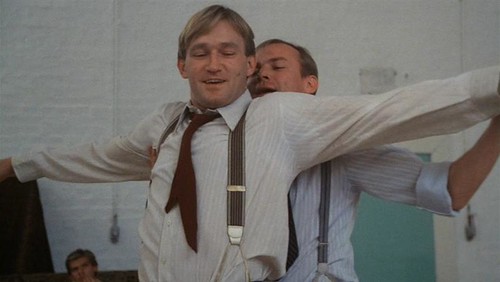
Miklas (Cserhalmi, left) and Heindrik (Brandauer, right) practicing for MephistoStill rehearsing for Mephisto
Mephisto is the first film in the trilogy (Mephisto, Colonel Redl, Hanussen) by the Hungarian director, Istvan Szabo. This trilogy is a series of character studies exploring the compromises that individuals, in particular talented and ambitious individuals, make to work within a totalitarian system and explores the effects of these compromises on the individual as a person. It explores the responsibility and culpability of the both the artist and their art.
“...because I know the world of theatre, and because I love actors, I look at them. They can communicate with the audience, reach out to, challenge or seduce the people watching. So they represent all the talented people in life. They help me, through their stories, to tell the problems of talented people.” –- Istvan Svadbo.

In Mephisto, Szabo explores this conflict using the fictional story of Hendrik Hoefgen, a talented and ambitious actor/director, who decides to stay and continue to work in Germany after the Nazis come to power. The story follows Hendrik from his early days in Hamburg as a provincial actor/director caught up in the excitement of changing the theater as a socialist experience. He is possessed of grand dreams, a palpable vanity, and unrelenting ambition. Yet he is strikingly human in his vulnerability, and Maria-Brandauer perfectly brings to the screen this mix of vulnerability combined with a sense of ‘grand destiny’, and pulls of difficult, intimate monologues that make one’s stomach lurch.

As the Nazis gain political power, Hendrik’s social circle is increasingly focused on the political changes and people close to him are struggling with the decision to stay or go. Hendrik is concerned only with art. He chooses to believe that his professional life is not a political statement: “What is politics to me? I’m an artist, an artist. I don’t care about politics.” When the Nazis eventually win in the elections, Hendrik chooses to stay (well, more specifically he returns to Germany since he happened to be out of the country at the time). Whatever he might have told himself about the artist being apolitical, a totalitarian government holds no such illusions. The story follows how he is seduced and manipulated by the Nazis and his concomitant moral corruption until he is little more than a Nazi puppet. And yet, it is a sympathetic – while still unforgiving --character study.
“Vanity is the artist's weakness; it enables seduction. Those are the problems, but they did nothing wrong. The problem is that if you once decide to be a prostitute, then you cannot start to cry if you have to make love for money.” – Istvan Svadbo.

The dilemma faced by the artist within a totalitarian government is a dilemma that is personal to Szabo. Born in 1936, he would have experienced during his formative early 20s, the most brutal of the communist period – the 1950s – during which dissent was severely punished and creative output constrained in the soviet realism style. In the 1956, there was the Hungarian Uprising, a populist revolt against the Communist government. This revolt was brutally and bloodily crushed by the Russian Army – afterwards many people were jailed or executed and a strict totalitarianism was imposed for another 30 years. Szabo was 20 years old in 1956.
“I am a child of the 2nd world war and when I went to the school, we had the Stalin era, which was really very hard and terrible. And then we had the revolution in 1956, so I had not an hour in my life that was not influenced by historical and political events. And I know nobody from my family or even from my neighborhood, they were not influenced by terrible political tragedies. Lost people, lost families, emigrated people everywhere around myself.” --Istvan Svadbo [from the Naked Face interviews on the DVD]

Although Mephisto is set in Nazi Germany, the themes in the film are part of the common experience of Central Europe in the 20th century and of Svadbo’s personal experience – the revolutionary period, then a nationalistic period, followed by ideological totalitarianism. Szabo is exploring transformations he surely saw in friends and perhaps feared in himself. Szabo does not give any easy answers or opinions on this. But he grapples with an issue that we can’t avoid:
"To be accepted by a political regime and accept it, or not. How to live in a country that has an ideology, a state ideology, which is terrible. What is the role of the artist, what is the role of art. How to manage it. And what to do with the real values? Can you leave them and run away? Or is it your duty to save them. So there are enormous questions. The major question is if an artist is guilty because he is corrupted by a political regime, is his art also guilty?" -- Istvan Svadbo

Brandauer as MephistoRehearsing for a play

Buy it at Amazon
Rent from Netflix

Labels: , , , ,

Wednesday, November 02, 2005

Magyar Rapszódia * *

This one of Miklós Jancso's works dealing with the relationships between the classes in pre-revolutionary Hungary. You've never heard of this director, I'm positive. But here's what some film critic said about him: "Jancsó is a giant of world cinema, yet his works are rarely seen and much of his oeuvre languishes in total obscurity." (here). This film, Hungarian Rhapsody is set in 1911, and follows Istvan, a nobleman who joins ranks with the peasants in opposition to the ruling class in general, and his statesman brother in particular. It's highly symbolic (it felt like a weird, over-serious play). Lots of dancing, singing, on plains with nude women dancing around for no apparent reason. I often couldn't figure out what it was symbolic of, however. One thing I can say is that the filmmaking is quite different than anything you'll see today -- quite stylized. Here's a long artsy analysis of this film (here). I couldn't make sense of the analysis, either. Boy, you know you're lost when you can't even make sense of a film review.

Why on earth did I watch this film? Well, it has Gyorgy Cserhalmi in it, and I'm trying to see his films. His performance here, was...well...I think he's improved a lot with age. Why am I giving it 2 stars? First, it is not because I think you should ever see this film. But there was something bizarely compelling about it to me. I'm glad I saw it.

This is tricky to get a hold of. Buy it from Amazon although it might not be in stock. Facets.org also lists it but as Hungarian Rhapsody, although again it might not be in stock. Scarecrow Video has it for rent.

Labels: , , ,

Monday, October 31, 2005

Zelary * * * * *

This is a beautiful epic film is set in 1943/45 in Czechoslovakia. It is based loosely on a true story about a young Prague medical student woman who is working for the resistance, and when she is discovered, must flee to the Czech boonies with an older mountain man to his tiny, tiny village in the mountains. To save herself and all who have helped her, she must marry him and somehow fit in with the village folk. The film is largely about her relationship with this man who protects her, as it changes from reserved and awkward to intimate, and about her experiences with the characters in the village.

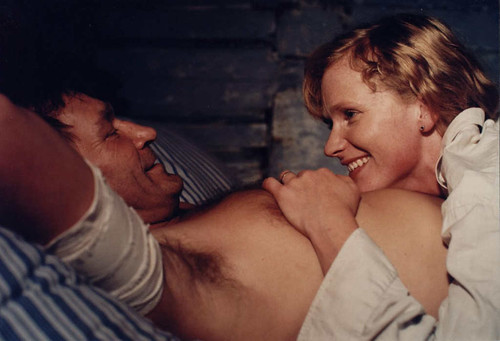
The acting is very strong throughout, so it is a bit unfair to just concentrate on the two leads, but that being said, they give very compelling performances. Ana Geislerova is perfect as the young sophisticated woman who must hide herself in this small village and to fit in must marry Joza. She wants to just cry and throw a tantrum, but she can't. This is simply what has to be done in the situation she is in. Her co-lead is Hungarian veteran actor, György Cserhalmi, who looks in the movie like a cross between Harrison Ford and John Wayne -- in real life he looks like a typical scruffy Eastern European actor pic here. Cserhalmi is perfect as the strong, taciturn, mid-50s sawmill worker.

I was floored by Ana Geislorova and Gyorgy Cserhalmi's performances (by the way, these two are *very* famous in their respective countries, although unless you are from Eastern Europe, you have probably never heard of them). The charisma and believability of their scenes together is really unusual. While I can think of many performances where an actor or actress was able to channel the emotions of a character, I can't think of many where they do this successfully with another actor/actress. The success of their performances was perhaps due to the fact that the 2 actors weren't talking to each other off the set; there was a bit of a language barrier since György is Hungarian and Ana is Czech. They basically kept their interactions to the lines they uttered while filming. In an interview on zelary.com, Ana says "Sometimes I had to smile to myself, that we [meaning she and György] were working next to each other about a quarter of a year and saying nothing to each other off the set, and at the moment they said 'action', we would jump into being all lovey-dovey and all that absolutely without any problems. We knew each other only as characters in the film...somehow it worked." (a rough translation). And on top of this, György said many of his lines in Hungarian(!!). Obviously they re-recorded him saying his lines in Czech later. I think this is part of what makes their performances together so compelling, with no verbal communication they put a lot more intensity into their eyes and body language.

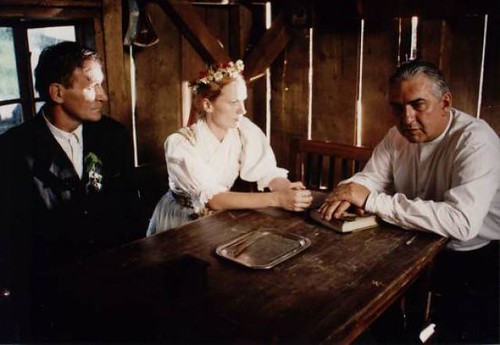
Miroslav Donutil also puts in a nice performance here that takes advantage of his wonderful voice -- he delivers a sermon. One of the best scenes is when he is talking with Joza and Hana before the wedding. He knows he is committing fraud and putting his life in danger by doing this, but the alternative is to turn in Hana, which would lead to the deaths of Joza and the town doctor. He has a monologue where he argues both sides to himself (while Joza and Hana watch rather nervously), finally with a deep sigh: "Well, I hope you're single at least." Joza clearly had not considered this appalling possibility, and his expression here is quite funny. It's a precious scene. Other films with Miroslav Donutil (the priest) that I've reviewed: Pelisky.


Other films with Gyorgy Cserhalmi that I've reviewed: Gyorgy Cserhalmi films

Labels: , ,

Sunday, October 30, 2005

Kárhozat (Damnation) * * * *

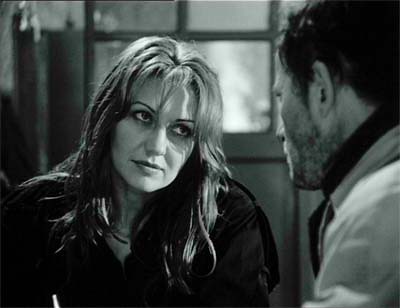
I gave this 4 stars not because it was enjoyable, but because it was one of the most memorable films I've seen and reminded me very much of the the time I spent watching East Berlin in the mid-1980s when I was a student in West Berlin -- just sitting on subway or on a bench somewhere, nowhere, just looking at the terminal grayness, a grayness that seemed to seep into the being of the passerbys. So yes, this film is ultimate film-noir. It is a film by the famous-for-dark-noir Hungarian director Bela Tarr (review at kinoeye.org). I suggest this film to anyone who's spent time in Eastern Europe and thinks they might enjoy a noir film. It's in black-and-white, very artsy, with long, long staring takes. I think there was one take of water dripping down a wall for over 2 minutes. And the rain; you can almost feel it seeping into your lungs. And the endless coal cars going overhead. The movie also has the most nihilistic sex scene I've ever seen. It's not what you'd expect -- like a human counterpart to the water running down the wall. It's another art shot -- nothing is really happening at all. I'm actually considering buying this movie, which is very unusual for me. It comes in a 2 part disc set with another bleak art movie, but I didn't watch the other one.

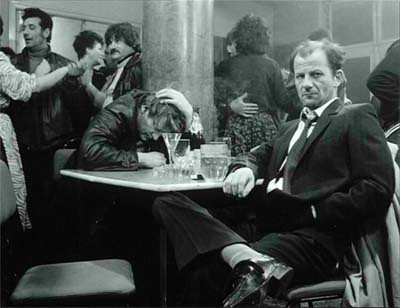
I watched this because I was curious to see Gyorgy Cserhalmi in another role after Zelary. He was the least hypnotic of the performers (he's the one asleep on the table in the picture above). I think this was the script. His character was meant to be shallower, perhaps. On the otherhand, the main supporting woman was really quite captivating, if a bit depressing.
Buy from DVDTimes
Rent at Scarecrow Video in Seattle.

Labels: , ,

Kontroll * *

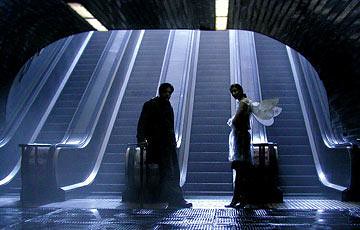
This is a recent Hungarian movie set in the Budapest subway system. Not much happens. A lot of over the top symbolism about maybe depression or futility or nihilism, or something like that. Then the main character is brought to the light by a fair maiden. Hmm.... Well, I didn't fast-forward through anything, but I kind of wish I had. The only bit that was interesting/memorable is how much the characters looked -- physically that is -- like people out of Seattle. The same grungy look can be seen on any bus. Also facial features often looked American; made me wonder how many Americans have Hungarian ancestry.

Despite my tepid review, this would be a fun film to watch with friends. The characters are engaging. Just be prepared for quirky.

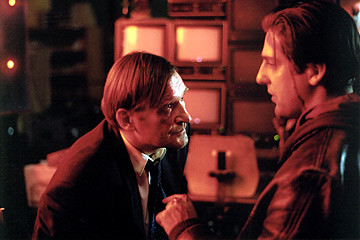
I picked this up to see something recent with Gyorgy Cserhalmi after being impressed with his performance in Zelery. He was in a supporting role here (that's him on the left), and his performance was nothing memorable or particular. In fact, I kind of thought he was miscast. He's supposed to be menacing, but he did not give off a proper villainous aura.

The movie is as quirky as the trailer:

Labels: ,