Derzu Uzala (1975)* * *
 Dersu Uzala (link to DVD on Amazon)
Derzu Uzala (1975) is a film by the great Japenese director, Akira Kurosawa, that is set right around the turn of the century (1902 to 1910) in eastern Siberia. It is the story of a Russian surveyor who is mapping the far east and north and is based on the memoirs of a Russian explorer, Vladimir Arsenyev. During one expedition, the surveying group runs into a native hunter, Derzu, who becomes their guide. He is a gentle soul who has known hardship--his wife, son and daughter died from smallpox years ago. Since then he has become a hunter/trapper.
The movie follows the surveyor and Derzu through a series of trips and adventures through the wild Russian landscape--though dense dark forests, wild rivers, and the endless northern tundra. I watched it on a very small screen which was a shame; the landscapes deserve to be seen on a big screen. Derzu is quite old and after a number of years, he loses his keen eyesight and can no longer hunt. The surveyor takes him into his home with his wife and son in a the city, but Derzu is like a trapped bird in the city. Eventually he must return to the woods.

To my eyes, the movie was mainly about grand nature and the smallness of man within it. The part of the film where Derzu and Arsenyev are in the tundra and get caught out after dark especially plays on this theme. The turn of the century was a time of enormous change in Russia--just before the 1914 revolution and the start of the industrial period. The death of Derzu can be seen as a metaphor for the death of nature that occurred at this time. That this is a surveyor team can also be seen as a metaphor--nature's mysteries are reduced to lines on a piece of paper.
Most of the outdoor filming occurs in the Russian far east (just west of Japan) in the Primorsky Kray region. This is interesting to see. Filming also occurs in Siberia, although I could not find out exactly where. Kurosawa really captures the vastness of Siberian tundra.
Why 3 stars? This is considered a classic film by a great director. However, my own take was that the cinematography was super but the acting and story was nothing special. I would watch it again but this time with a projector so I could enjoy the shots of the vast Russian landscape.
This clip from the film will give you a sense of the film:
Labels: cinematography, Kurosawa, Nature, Russian, Siberia
posted by eeh at 11:34 AM


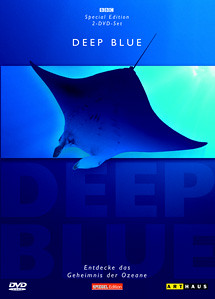 The Deep Blue (2003) is an amazing documentary about life in the ocean. It is filmed in multiple locations around the world's oceans. Polar, tropical, Atlantic, Pacific... Watching it we just couldn't stop say "Oh, Wow, WHAT is that? Whoa, that is sooo amazing!" over and over. Even if you study the oceans and have seen a lot of nature videos, you are guaranteed to see something new and amazing. Probably you will also see footage of something you have always wanted to see. As I write this I am watching night footage of a ray attacking a fish and white-tipped reef sharks tirelessly searching the reef for hidden fish in the dark. Seriously cool stuff. And it has the mostly amazing footage of fish schooling -- like a tornado under water. This ranks as about the best nature photography I have ever seen!! I've seen a lot of IMAX nature documentaries; this one blows all those out of the water (ha, ha).
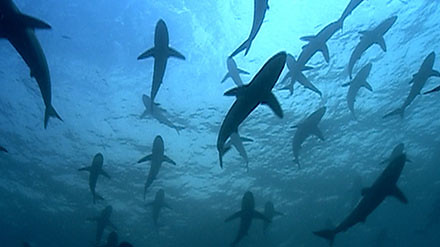 So it's a MUST see for anyone into nature photography and documentaries. Note it may be a bit much for kids who have a hard time with animals getting eaten. There are some graphic scenes of baby sea lions getting nailed by by killer whales, a pack of killer whales working together to kill a grey whale calf, and other scenes of predators in action: rays, sharks, octopuses, etc. My 5-year old cried during these parts; we lied and told him the calf got away (he wanted to believe this so ignored the graphic evidence to the contrary...). Also the DVD is not exactly educational. It's mostly amazing photography with little dialogue. Kids probably should start off with some more educational DVDs and trips to the aquarium to really appreciate this.
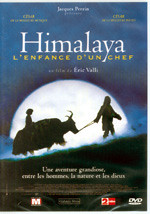 Yaks, big mountains with no trees, different culture, and an exciting adventure to boot. I picked this up on a lark from the library and was surprised that I'd never seen this before. It was an Oscar nominee for best foreign film a number of years ago. It's the story of an old man, the chief in a Himalayan village, whose son is killed in an accident. The old man in his grief blames his son's best friend and a battle of wills ensues -- for the son's friend is the most qualified to take the son's place as the new chief and is best qualified to lead the yaks over the mountains to trade salt. But the old man will hear none of that and insists on leading the yaks train himself, along with a rag-tag bunch of others, over the mountains. It is a beautiful and at times nerve-racking trip, during which the old man and the young man learn a great deal about themselves and each other.
