Berlin Diary (1941)* * * *
 Berlin Diary (link to book at Amazon)
At 21 in 1925, William Shirer left the States to work as a foreign journalist in India and Europe. 1933 he took off a year to be a beach bum in a little village in Spain with his wife, but the dollar took a hammering, their saving took a beating, and Shirer had to quickly get a job. He worked in Paris for a few months, at a reporting job that bored him to tears, but then in early 1934, he landed a better job in Berlin. Thus it came to be that he spent 7 years in Berlin covering the rise of Hilter and the early years of WWII when Germany was celebrating one incredible victory after another. This 'diary' is not about himself, but his commentary on the events around him and on which he was reporting. As a foreign correspondent of a major U.S. radio company, he reported at the center of the major events happening at the time. Later Shirer would write many books about Nazi Germany, the most famous being The Rise and Fall of the Third Reich. But Berlin Diary is before all that, written in the moment and full of the uncertainty and tension that comes with not knowing how things will turn out and not knowing exactly what is happening (each side, Axis and Allies, are putting their spin on their news and official reports).
This inside-American view of the rise of Hitler and Germany would be fascinating on its own sake. But what was really gripping about this book is that is was published in April 1941 -- at the height of German power. Austria, Czechoslovakia, Poland, Holland, Belgium, France have all fallen to Germany. Britain is being bombed and it is not at all clear that she can win against the superior German army and air force. Shirer did not know how it would all turn out when he published this shortly after his return from Berlin in December 1940. It is easy when thinking about WWII to think that 'oh, yeah, Germany took over Austria and then invaded Poland..yada..yada' as if it were obvious this would happen and that Germany would be so successful. But from reading Shirer's journal, you are reminded how incredible and NOT clear these events were. Hitler was playing a game of bluff -- threatening war to get countries to just roll over and play dead. As each piece of territory was taken over, the German war machine gained strength until Hitler no longer had to bluff but could just drop the hammer.
Reading this diary, I felt like it was all happening right now. Each evening I was eager to read to find out what had happened that day. My husband and step-son were amused when I would shuffle down-hearted into the kitchen; 'What's wrong?' they would ask. 'Poland has been invaded. They are getting slaughtered.' I would reply in all seriousness. The funny thing is that while reading Shirer's book it did feel real -- well, it is real though it happened 75 years ago. By reading his diary, I experienced in a small way the emotions and shock that Shirer felt watching these incredible events unfold.
posted by eeh at 9:36 AM


 In the second month of the diary, the Russian Army leaves from her part of town. Gone are the Russian visitors. Gone is the food. Back to potatoes and nettles. She joins a number of forced labor call-ups. A day of rubble clearing. A week dismantling a factory and loading it on a train to Russia. I have often wondered how the Germans (esp women) could rebuild Berlin so fast after the war. I had imagined that the women must have been shattered by their experiences. Some were. But this book gives insight into the many women who were not. Who somehow coped and focused on the work to be done and not on self-pity. As one woman comments, "Life goes on..."
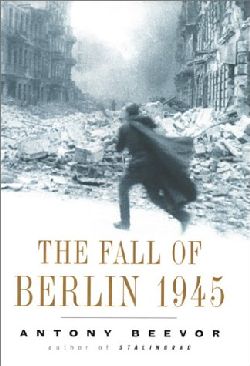 The Fall of Berlin is the follow-up book by the author of Stalingrad: the Final Siege. TFOB starts as the Russians cross the German border in East Prussia. For those who are spotty on their post-WWI geography (meaning 99.999% of us), Prussia was is in the Baltics (meaning up by Lithuania) and extended across modern day northern Germany (formerly East Germany), Western Poland, parts of Lithuania, and far southwestern Russia (parts it annexed after WWII from Germany). Much of the first third of the book is about the invasion of Prussia and the attempts by civilians to escape. This was especially interesting to me because I know someone who's mother and grandmother were among those civilians. About 1/4 million civilians were trapped in Konigsberg at one point, completely surrounded by the Russian Army. My friend's mother was trapped there and was among those that crossed the ice of Frisches Haff (a bay) on foot to reach a small spit of land that the Germans still held. From there they walked into Germany through a thin corridor of German-held land to East Germany. Later after the Germans surrendered, they escaped from East Germany to the West.
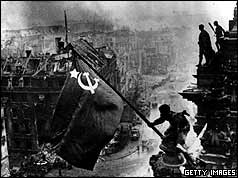 Surprisingly this part of the book was not terribly interesting (for me). Lots of space is devoted to troop movements (yawn). You don't get a sense from the book about what the civilians in Berlin went through. This is surprising since there were many diaries published from that period. For some reason, this part just seemed a bit mechanical. Basically, the sense you get from the book is that Berlin fell without much of a fight in the city proper and then people started getting on with their lives. That's hard for me to believe. The city was reduced to rubble and the depression among the people must have been extreme. My next book is "A Woman in Berlin" which is a diary from the 9 days of the battle. I expect that this book will give a different picture.
